 Bean Boat
2022 Europe trip 1/2 - Portugal
Last December, we finally went out of the States the first time since Covid started. Mid-December turned out to be a good time for traveling in Europe as there were Christmas markets in every city and they were all different in some way. The markets sold the most local food and crafting goods, from which we learned more about the cities.
This is the first part of our 2022 year end Europe trip, when we visited Portugal. See here for the second part.
Lisbon
Lisbon has the atmosphere of a small town with narrow streets and tiny houses. Many restaurants and stores are mixed in the residential buildings with simple entries. Cobblestone streets are everywhere in the city center, and surprisingly, cars also drive on them. People here seem to prefer cats over dogs for petting. They keep the cats on leash but allow them to walk outside of the houses.
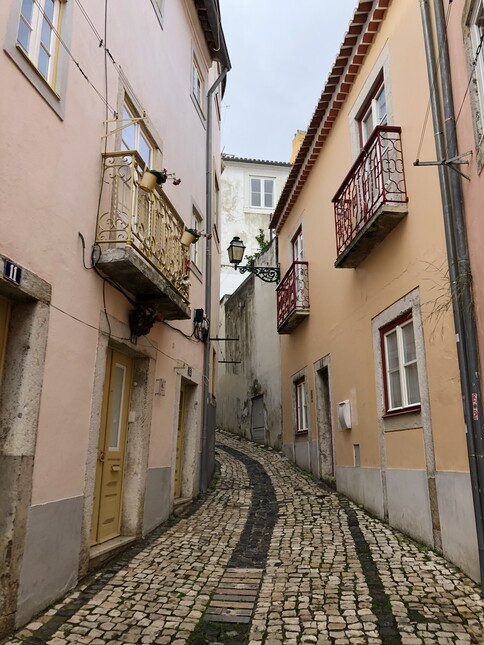
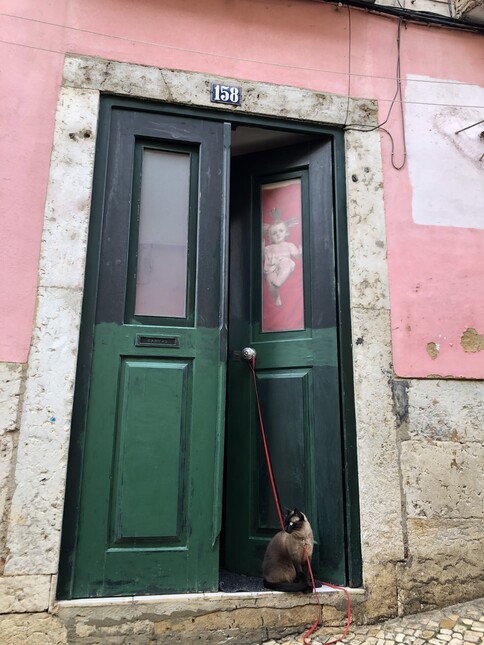
Like other European cities, Lisbon buildings are all well-decorated, such as windows with flower and traditional wooden blinds and painted walls. Tiles and blue-ink paintings are unique to Portugal and its surrounding area and have a long history. There were exhibitions for them in Royal Alcázars of Seville. We bought two framed tiles as souvenirs. An interesting discovery was that Portuguese grows orange trees. We saw so many of them sporadically across Lisbon and Porto. It was until we visited Seville that we realized maybe the habit of growing orange trees in Portugal might be passed from there. Those are sour oranges that are planted for the good smell, rather than for eating.
For eating, Portugal has the most wonderful Pastéis de Nata. We had at least two everyday. Other desserts like chocolate salami are also amazing.
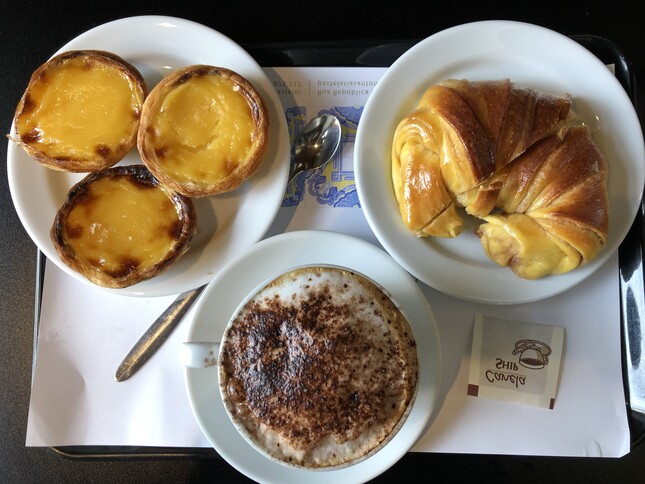
Zoltan visited Lisbon a few years ago. According to him, the number of immigrants in the city has soared since then. We saw a lot of them selling roasted chestnuts in a portal install on the streets. The chestnuts were pretty tasty. Some however added a shadow to the city. Watch out for burglary there. We had a first-hand experience when stepping out of the subway that took us from the airport to the city center. A person pretended to talk to Zoltan, shook hands, and wanted to release the watch from his hand.
Another thing that surprised me was the minivans that are usually owned privately as a replacement for taxi. Especially in Sintra, the exit of the train station was surrounded by them and the owners would reach out directly and offer deals. We had similar transportation back in my hometown in China in the past, but they were being eliminated by the government due to safety concerns.
Sintra
Sintra is 40 minutes away from Lisbon by train. The train is a commuter train, meaning the frequency is high and you do not need to buy the tickets beforehand. Sintra is where the Portugues royal family used to live. The Pena Palace is still there for visiting. There are numerous palaces, castles and royal gardens in Sintra. We visited Pena, xx, and the Moorish castle. The Moorish castle was the last one that we visited. Because it was raining that day and it was close to the evening, the whole castle had only a couple visitors and it was such as a fantastic experience. The castle has short walls and tiny towers, and gives a different vibe from Castelo de S. Jorge.
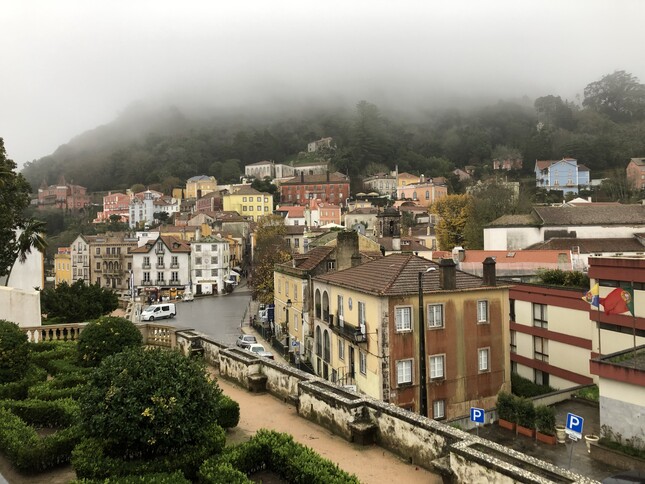
I do recommend stopping in Sintra for a day or two if you have time when visiting Lisbon. The city is less urbanized and gives a different perspective to Portugal.
Porto
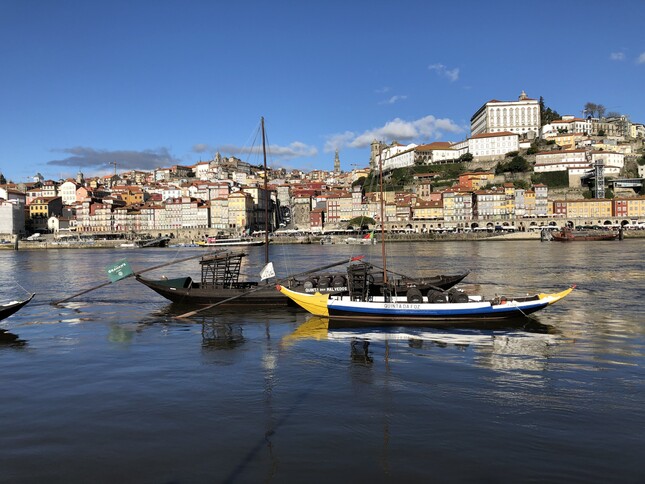
Porto is a port city and has been rich thanks to the commercial dynamics, especially of the Port wines. The xx Palace is more extravagant than the churches or palaces in Lisbon. And the room designed for meeting merchants is simply eye-opening. The baroque style church makes all other churches look too simple.
We did not get the time to tour the Douro Valley or the vineries, which was a pity, but we managed to get a self-guided winery tour in Taylor’s in Vila Nova de Gaia, on the other side of the Douro River. We also tried a few types of wines and took a boat trip in the Douro River.
Porto shares a lot of commonalities with Lisbon. It has great bakeries with great Pastéis de Nat. We went to one in front of the train station for breakfast every day. It was funny that there were so many pigeons around the outdoor seating area, fighting for leftover food whenever a table was empty. The fights were so fierce that they broke plates and coffee cups from time to time. There are a few Portuguese dish originated from Porto. For example, Francesinha - a huge sandwich with all sorts of meat, Bacalhau à Gomes de Sá - a casserole made of cod.
Guimarães
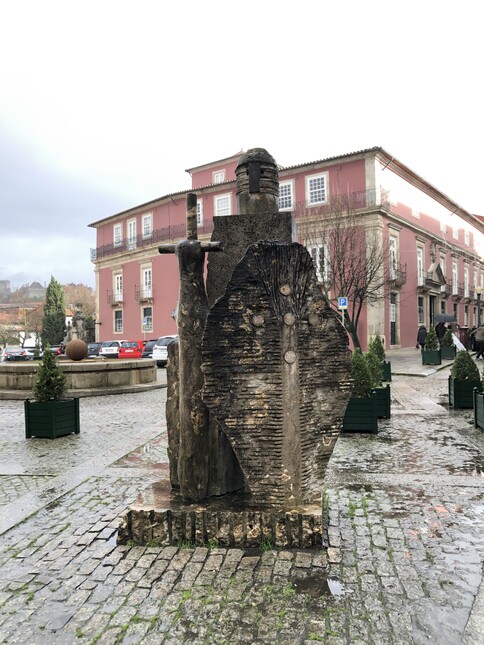
Guimarães is a small city close to Porto. It was the capital of Portugal and the home to the first King of Portugal Afonso. For tourism purposes, it is not a place with a lot to see, but is worth stopping for a short time.
Final words
Zoltan has the obeservation that if a country used to be over the top in wealth, you can see it from the legacies. But Portugal is an exception. Despite its long history, one of the longest in all countries, and once upon a time it being on the top of the colonialism. My overall impression of Portuguese cities is more of romantic small towns with warm climate and low living cost.